 |
|
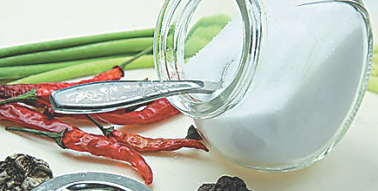
Researchers find the average dietary salt consumption of Chinese residents has declined but is still nearly twice the amount recommended by the World Health Organization [Photo provided to China Daily] |
Salt intake has been on the decline in China since 2000, but it currently is still nearly twice the amount recommended by the World Health Organization, a new study said on Tuesday. Published in the US journal Jama, the study was based on total diet surveys in 2000, and from 2009-2011 in 12 of China's 31 mainland provinces, covering at least 46 percent of the Chinese population.
The researchers found the average dietary salt consumption of Chinese residents declined by 22.2 percent, from 11.8 grams per day in 2000 to 9.2 grams per day in 2009.
"If we continue on the current pace, it's possible for China to achieve the target proposed by the World Health Organization to reduce average daily salt consumption by 30 percent by 2030," says lead author Wu Yongning of the China National Center for Food Safety Risk Assessment.
But simply weighing dietary salt intake underestimated sodium consumption in China, Wu notes.
When taking salt from soy sauce, processed foods and pickled vegetables into account, sodium intake in China in the studied years decreased by just 12.3 percent, from 6.4 grams per day to 5.6 grams per day, he says.
"This rate is not optimistic," Wu says.
The WHO recommends that people should consume less than 5 grams of salt or 2 grams of sodium per day.
"Although average salt consumption of Chinese residents fell significantly during the 10 years, it's still far from the ideal sodium intake," Wu says.
The most dramatic reductions were recorded in Jiangxi, Hubei and Sichuan, with salt intake in each of those provinces declining by more than 40 percent, though all remain higher than the WHO-recommended level.
Rising incidence of high blood pressure and other chronic diseases also indicated that China needed to strictly control and consistently reduce salt intake.
"China's diet is changing and refrigeration is replacing salt for food preservation," their paper states.
"High sodium intake persists due to addition of salt and other seasonings during food preparation, and increasing consumption of processed food. Further efforts are needed to limit salt/sodium intake, and regular monitoring is needed to assess progress."
The report notes that noncommunicable diseases are increasing globally with major socio-economic implications. The WHO has proposed nine noncommunicable disease-related targets, including the 30 percent reduction in salt/sodium intake to reduce risk of hypertension.
Copyright 1995 - . All rights reserved. The content (including but not limited to text, photo, multimedia information, etc) published in this site belongs to China Daily Information Co (CDIC). Without written authorization from CDIC, such content shall not be republished or used in any form. Note: Browsers with 1024*768 or higher resolution are suggested for this site.
License for publishing multimedia online 0108263 Registration Number: 130349 










 Raymond Zhou
 Op Rana
 Berlin Fang
 Zhu Yuan
 Huang Xiangyang
 Chen Weihua