|
|
The fightback begins
"The bloody slaughter revealed the brutal nature of the Japanese troops and woke the residents from a dream that civilians would be excluded from the war," said Lyu Tongyu, the son of commander Lyu.
The massacre backfired on the Japanese; rather than forcing the public into cowed compliance, the huge loss of civilian life ignited fierce resistance in the central Hebei region as residents organized themselves into teams to fight and harass the Japanese for the next eight years, the 73-year-old said.
A month after the massacre, a group organized by Ma Yutang, a Communist Party member, recaptured Gaocheng county in Hebei (now part of Shijiazhuang city), but Meihua remained occupied for a further eight years, according to the government documents.
Spurred by Ma's success, local residents across Gaocheng began forming local militias to fight the Japanese, while noncombatants provided support in the form of food and other essential materials.
Lyu Zhengcao and his troops also pursued a promising path after leaving Meihua. According to Lyu's memoir, he led his group to the east, arriving in Xiaoqiao, a town in Hebei's Zhaoxian county, late on Oct 12. However, when the Kuomintang commanders ordered Lyu to retreat instead of engaging the enemy, he and his troops decided to break with the Nationalists and become a guerrilla outfit, operating in the north of the province.
Having taken the first step, the former Kuomintang troops joined the Communist forces, and by 1938 their numbers had swollen to more than 100,000.
The group was a major force in the Central Hebei Anti-Japanese Base Area, according to Lyu Tongyu, who, in 1983, joined with other descendents of the soldiers to found the War Association of Central Hebei, which researches the condition of the province during wartime and the development of several anti-Japanese base areas.
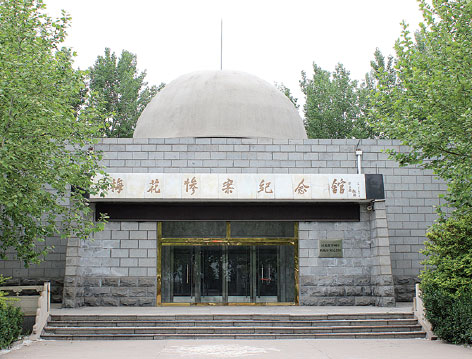
The association has collected as many records and other materials as possible, and frequently visits famous sites and regions, including Meihua, which holds an important place in history because of the subsequent actions of Lyu Zhengcao and his troops. Gao, of the mass-acre museum, said Lyu selected Meihua as one of his bases and as a starting point for the battles that followed, and he always cared about the town's development.

Copyright 1995 - . All rights reserved. The content (including but not limited to text, photo, multimedia information, etc) published in this site belongs to China Daily Information Co (CDIC). Without written authorization from CDIC, such content shall not be republished or used in any form. Note: Browsers with 1024*768 or higher resolution are suggested for this site.
License for publishing multimedia online 0108263 Registration Number: 130349