Comments
  Print
Print  Mail
Mail  Large Medium Small
Easing workers' burden
Individual income tax has come a long way in China. It was enacted in 1980, when China's economic reform was still in its infancy and the average urban income was about 64 yuan a month. The threshold was initially set at 800 yuan a month, based on the living cost for foreigners, said Shi Yaobin, director of the Finance Ministry's tax policy department in 2005.
By 1992, only 1 percent of China's working population earned more than 800 yuan a month. A decade later, that number jumped to 52 percent, said then-Finance Minister Jin Renqing. The threshold was raised to 1,600 yuan in 2005 and to 2,000 in 2008.
Central authorities say the latest draft plan to the individual income tax law aims to help low-wage workers combat rising living costs. It will also serve as a means to boost domestic consumption, thereby helping transform China's export-oriented growth mode, said Zheng Xinli, a member of the National Committee of the CPPCC.
Raising the individual income tax entry point to 3,000 yuan a month will exempt more than 20 percent of China's labor force from income taxes, China International Capital Corp, the country's top investment bank, said in a recent report.
While welcoming the draft plan, experts, lawyers and some wage earners suspect its proposed effect on narrowing the wealth gap will be limited.
Salaries, the main source of individual income tax, are a trivial portion of income for the more affluent people, said Zhang Wenchun, a taxation professor with the School of Finances at Renmin University.
Zhou Dewen, president of the Small and Medium Enterprises Development Association in Wenzhou, Zhejiang province, one of China's wealthiest cities, acknowledged that business owners typically do not have high salaries.
"Their profits are mostly from stock shares or appreciation of their business assets," he said. Zhou himself is paid just 3,000 yuan a month by the association, but also serves as board members at "a few companies". He said he pays no tax on dividends from shares.
"I support higher taxes for the rich. But it's the government's job to think about how to tax high-income people," Zhou said.
Not enough, some say
With its top marginal rate at 45 percent for monthly incomes of more than 100,000 yuan, China's individual income tax is nominally more progressive than in most countries. But researchers say that tax collection begs for serious improvement, and it takes a package of tax reforms, not just raising the individual income tax entry, to fix things.
These other measures include imposing more taxes - including inheritance tax, gift tax and property tax - as well as taxing more on luxury spending, Zhang said.
Family burdens, too, need to be taken into account in individual income tax, said Liu Jianwen, director of the Research Center of Fiscal Law and Taxation Law at Peking University. "Say there's a family with two wage earners and another with just one. It's not fair to tax them the same way."
Thresholds and rates should be adjusted relative to inflation and exchange rates, and the highest tax rate of 45 percent should be kept, Liu said.
Individual income tax files for the well-off also should be connected to their IDs, he said, so tax authorities could more accurately and effectively track their income.
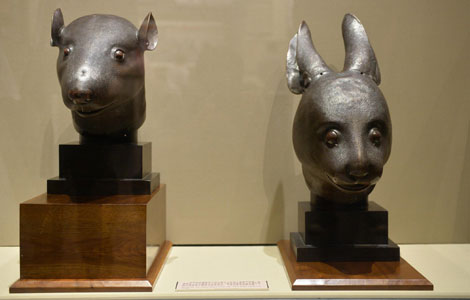
 Looted cultural relics displayed back in China
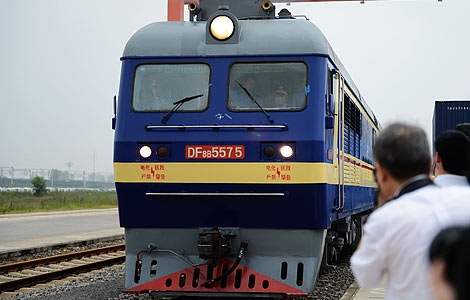 Zhengzhou starts rail cargo service to Hamburg
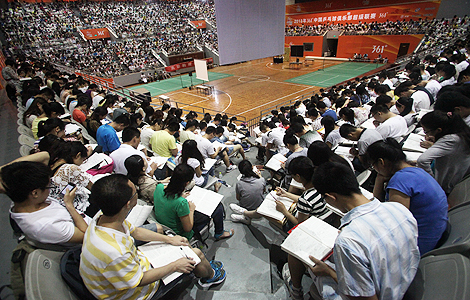 Jobless graduates swarm to grad school
 Fu becomes oldest living person at 116
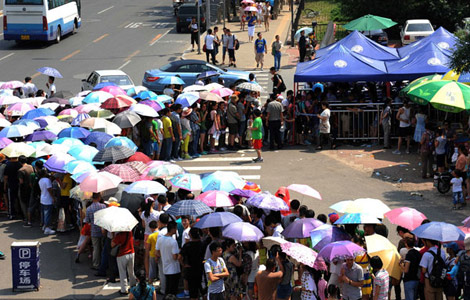 Peking University a hot tourist spot
 Building stands alone in East China
 Rain leads to bigger waterfall in C China
 Bruce Lee exhibition to open in Hong Kong
Copyright 1995 - . All rights reserved. The content (including but not limited to text, photo, multimedia information, etc) published in this site belongs to China Daily Information Co (CDIC). Without written authorization from CDIC, such content shall not be republished or used in any form. Note: Browsers with 1024*768 or higher resolution are suggested for this site.
License for publishing multimedia online 0108263 Registration Number: 20100000002731