|
|||
 |
|||
|
|||
|
|||
|
|||
|
|
||||||||||||||||||
With the Olympics looming, China goes green(ABC News)Updated: 2007-04-29 09:01
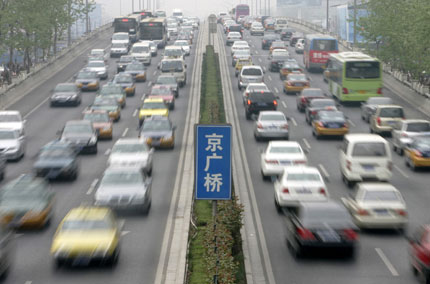
The school is revered for producing some of the country's best and brightest, yielding students who receive top scores on China's annual college entrance exams. The students at Number Two stand out, however, not only because of their academic achievement, but because of their enlightened attitude toward the environment. Over the last few years, especially since Beijing was awarded the 2008 Olympic Games, environmental awareness has gotten a new emphasis among those who will be the next generation of China's educated leaders. At the school, there is an environmental curriculum and an active environmental club. All of the attention paid to the environment poses a fundamental question: Can China sustain a booming economy and also protect its environment? China's Schools Going Green There is no question China wants to put its best foot forward for the Olympics, but there is a lot of work to be done. For example, because the air in China is still many times dirtier than the air in Los Angles, America's smoggiest city, the government is determined to increase China's air quality and reduce the amount of air pollution. "We are faced with challenges in our environmental protection work," said Du Shaozhong, Beijing's deputy director of the municipality's Environmental Protection Bureau. He showed ABC News how the city measured air quality around the clock. It
turns out the most polluted time of the day is 10 p.m., when the
exhaust-belching commercial trucks make their deliveries to the city.
"If we fail to balance the relationship between development and the environment, we would not be in a position to sustain development," he said. In economic terms alone, pollution has been expensive for China. The World Bank estimates that 10 percent of China's gross domestic product is lost to pollution, from workers calling in sick to factory shutdowns. "China itself, it's facing an environmental crisis across the board," said Elizabeth Economy, director of Asia studies at the Counsel on Foreign Relations in New York. She says a major problem is 30 percent of the water in China's rivers is too polluted, even for industrial use. "Just this past year they're talking about $42 billion lost in industrial output because the factories don't have enough water to run," she said. At the moment, however, the Olympics are at the top of the Chinese agenda, not just in Beijing but all across this country. Six years ago when it was awarded the Olympics, the city of Beijing pledged $13 billion to clean up the city. China's Solar Cities Despite all of this action, some worry that fundamental changes have yet to come, and that the changes in Beijing are just cosmetic and temporary. "I think that probably is the case at this point in time," Economy said. "What we're going to get with these Olympics really is just a shutdown of the city to make it work for those few weeks." At the same time there are visible signs of change: Millions of electric bikes have been sold, alternate energy sources are gaining popularity and China has become a world leader in solar thermal production and use. The city of Dezhou is the world's largest producer of solar water heaters and
the city of Rizhou is increasingly becoming a solar city. One in 10 Chinese
homes has solar hot water. And that understanding is beginning in places like the Number Two Middle School, as well as the 4,000 environmental groups that have sprung up in China since 1994. Courtesy of abcnews.go.com |